
THE COURSE ALWAYS TELLS THE TRUTH: WHAT GOLF AND THE MASTERS TEACH US ABOUT SELF-KNOWLEDGE, FAILURE, AND THE HONEST PATH FORWARD
A depth psychology reflection on Masters week and what Augusta National has always been trying to tell us about being human
The Masters begins today at Augusta National.
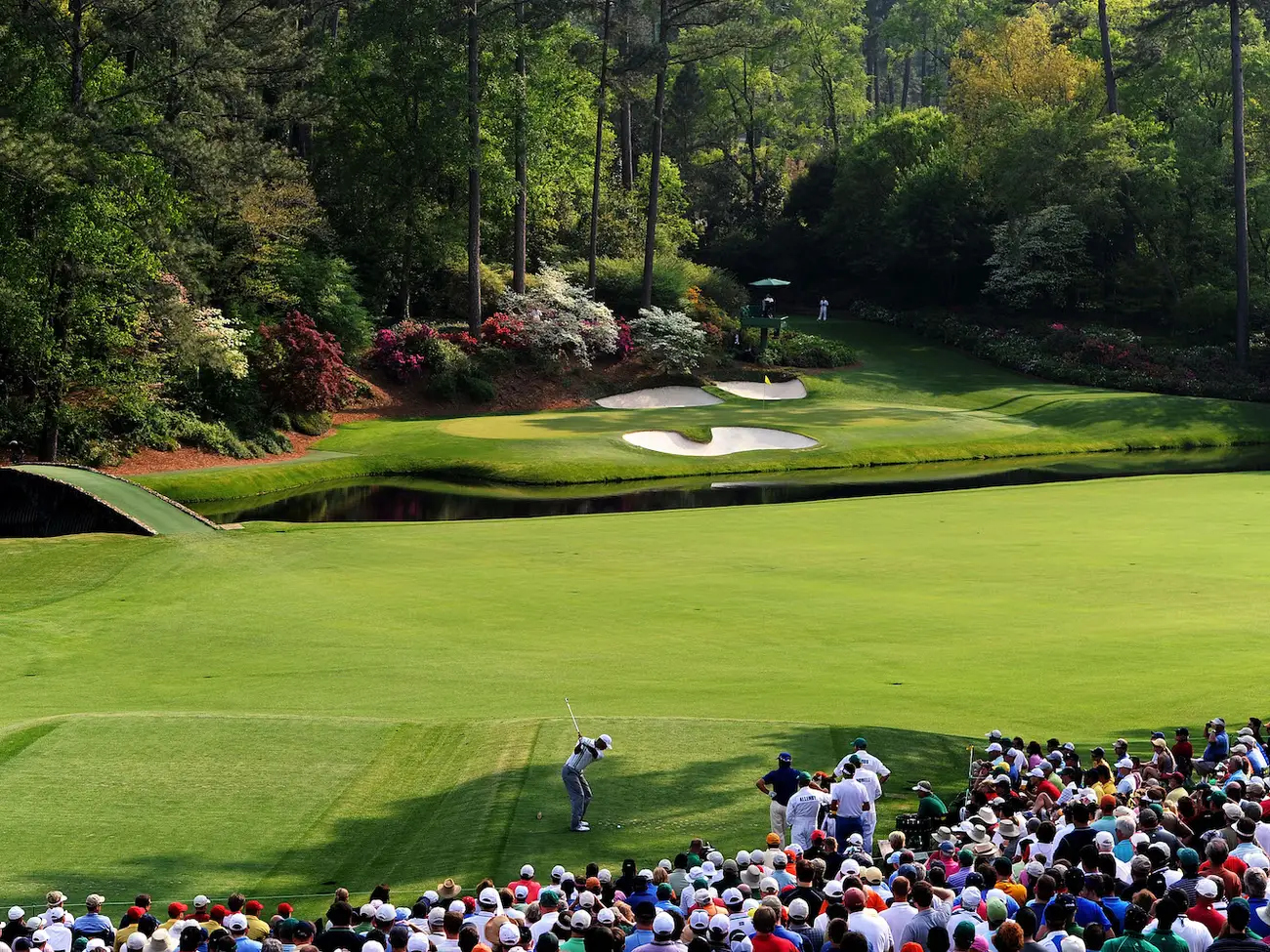
For those of us who follow golf, Masters week arrives with a particular quality of feeling. The azaleas. The cathedral pines. The emerald fairways that look like something out of a dream someone had about what a golf course should be. The hushed reverence of the patrons. The way the television coverage treats every shot at Augusta as though it matters in a deep profound way.
I have loved this tournament for as long as I can remember. Not just the golf but the story of life that is revealed within each shot. The preparation and pressure. A golfer’s confidence and limits. The confrontation between what a player believes they can do and what the course, on a particular day, in this particular moment, will actually allow.
Augusta National does not lie. It cannot be charmed or intimidated or overwhelmed into submission. It simply presents itself with this hole, this shot, this moment, and waits to see who you actually are.
That is what I want to write about today. Not who wins the 2026 Masters, but how each golfer is confronted with themselves. I want to write about what golf — and Augusta specifically — has always been trying to teach us about the deepest dimensions of being human.
The Honest Mirror
Golf is the only major sport in which the player calls penalties on themselves. In which the rules require not just compliance but the integrity and the willingness to report an infraction that no one else witnessed and will cost you something significant to acknowledge.
This is not incidental to the game. It is the game. Golf is built on the assumption that the player’s relationship with truth about the rules, about the lie of the ball, about what actually happened is more important than the score.
And then there is the score itself. In golf, unlike almost every other competitive endeavor, you cannot hide from your own performance. There is no team to absorb your mistakes. No coach to substitute you when things go badly. No half-time to regroup. Just you, the course, and the running total of every decision you have made.
The course always tells the truth. That is the phrase. And it means something profound.
When you overestimate your ability to carry a bunker; when you choose the aggressive line and discover, with the sickening certainty of a ball splashing into Rae’s Creek, that your confidence was ahead of your actual skill; the course has told you something true about yourself. Something you may not have wanted to know. And something you will have to contend with.
This confrontation between confidence and reality is one of the most psychologically rich experiences available in sport.
Skill, Mastery, and the Long Work of Becoming
Golf is a game of extraordinary technical complexity. The swing itself with the sequence of positions, the timing, the tempo, the coordination of body parts that do not naturally want to move in the way a good golf swing requires takes years to develop and a lifetime to refine. And this is before you have addressed putting, chipping, course management, mental game, or the particular demands of playing under pressure.
The distinction between skill and skill mastery is worth dwelling on. Skill is the ability to execute a shot under normal conditions. Skill mastery is the ability to execute that same shot when the tournament is on the line, the crowd is watching, the stakes are real, and every instinct in your nervous system is urging you to do something slightly different than what you have trained.
Watch Scottie Scheffler under pressure sometime. What makes him arguably the best player in the world is not that he has the most technically perfect swing — he does not. It is that his relationship to pressure has been refined to a remarkable degree. He rarely looks rushed. He accepts the patient play. He lets the tournament come to him rather than forcing something that is not there.
That is not just athletic skill. That is a psychological achievement. The result of thousands of hours of deliberate practice, competitive experience, failure and recovery is development of a self that can be genuinely present in the moment without being consumed by it.
Scheffler has developed is a relationship between his ego (the ordinary conscious self) that is aware of the stakes, the pressure and the gallery, and something deeper: the trained, integrated, genuinely embodied capacity that emerges when the ego gets out of its own way. The great athletes in every sport know this experience. The zone. The state of flow. The moment when execution is no longer effortful because the self has been refined to the point where the right action simply happens.
Augusta and the Confrontation With Yourself
Augusta National was designed by Bobby Jones and Alister MacKenzie in the early 1930s to reward excellence while making the cost of delusion absolutely clear.
The course is a study in contrast. Wide fairways that invite boldness and greens so fast and severely contoured that boldness without precision is catastrophically punished. The par fives are reachable in two for the long hitters to offer eagle opportunities to those who execute and watery graves to those who try to do more than they are actually capable of.
Holes eleven, twelve, and thirteen — Amen Corner — are perhaps the most psychologically concentrated stretch of holes in professional golf. In the span of three holes a tournament can be won or lost entirely. And what determines the outcome is never simply technical skill. It is the player’s ability to accurately assess their situation. What is going on in the present moment with the wind, the lie, their current level of trust in their swing. Now, they are asked to make decisions that are honest about what they can actually do rather than what they wish they could do.
Twelve at Augusta is a short par three. It plays to perhaps 155 yards. It has ended more Masters than almost any other hole on the course. Not because it is impossibly difficult in terms of pure distance, as it is the shortest hole in the tournament. But because the wind in Amen Corner swirls unpredictably. Because the green is thin and shallow and surrounded by water in front and a bunker behind. And because the player arriving at twelve has almost always just done something recently: birdied eleven, or bogeyed it, or made a miraculous par putt or chip that has altered their emotional state and therefore their decision-making.
The course does not ask what score you need. It asks who you are right now in this moment, with this wind, with what you are carrying from the last three holes and it demands an honest answer.
Most of the great collapses at Augusta have not been failures of technique. They have been failures of honest self-assessment. The player who chose the aggressive line when the honest play was somewhere else. The player whose confidence was ahead of their actual state of readiness in that moment. The player who could not accept the limitations of their current performance and paid the price for that refusal.
The Great White Shark and the Weight of History
Thirty years ago this week Greg Norman arrived at Augusta National on Sunday morning with a six-shot lead and the largest 54-hole advantage in Masters history. He was the best player in the world. He had already shot a 63 in the opening round, matching the course record. He had led the tournament wire to wire. He was 41 years old and this was supposed to be his moment to claim the green jacket that had eluded him through a career of near misses so numerous and so painful they had acquired their own mythology.
What followed over the next five hours is still considered the defining collapse in the history of major championship golf. A hooked drive on the first hole. A bogey. Then another. The back nine unraveling in real time with bogey on nine, bogey on ten, bogey on eleven, double bogey on twelve when his tee shot found the water at Rae’s Creek. By the time Norman’s chip for eagle on fifteen, the shot that might have kept him alive slid past the hole and he collapsed to his knees on the green, the outcome was no longer in doubt.
He shot 78. Nick Faldo shot 67. A six-shot lead became a five-shot deficit.
What makes the Norman story so psychologically rich and so clinically instructive is not the collapse itself. It is what happened afterward. And what had been happening inside him before the first ball was struck.
Years later Norman would confess that he had been privately tormented by doubt before he ever reached the first tee. That despite his public confidence the weight of his history at Augusta, the Larry Mize chip-in in 1987, Bob Tway’s bunker shot at the 1986 PGA, the accumulated near-misses that had become part of his identity and had been quietly eroding his foundation all week.
This is the psychological phenomenon that sports science calls catastrophe theory is the understanding that under sufficient stress and accumulated anxiety performance does not decline gradually but collapses suddenly and completely. The athlete who appears to be managing pressure is sometimes managing it at enormous cost and when the cost exceeds the capacity the result is not a gradual fade but a sudden and total unraveling.
The father wound in Norman’s history (his relationship with a demanding, difficult father who had shaped his relentless competitive drive) is not incidental to what happened that Sunday. The research on the 1996 collapse consistently points toward the psychological roots of Norman’s vulnerability at Augusta specifically. The course had become something beyond a golf course. It had become the arena of his deepest psychological struggle and not just with competitors but with himself.
And yet. When Norman walked into the interview room after shooting 78 he greeted the assembled press with a smile and said with characteristic directness — “I played like shit today. I don’t know, that’s probably the best way of putting it. It was all my mistakes today.”
No excuses. No elaborate explanations. No visible collapse of dignity to match the collapse of performance.
Nick Faldo who had just beaten him by five shots walked directly to him on the 18th green and embraced him. “I don’t know what to say to you,” Faldo said. “I just want to give you a hug.”
The grace Norman showed in that moment and in the years that followed is genuinely remarkable. He did not win the green jacket. He never would. But his capacity to face what had happened with honesty, humor, and a dignity that was clearly hard-won is something that has resonated with golf fans for thirty years.
This year is the 30th anniversary of that Sunday. Norman is not at Augusta this time. Whatever one thinks of the paths his career has taken since; and golf fans have strong opinions; that Sunday in 1996 belongs to the history of the game in a way that nothing that followed can diminish. The story is. As it always will be. Because what it shows us about the human capacity to take the biggest risk, fall the hardest, and still walk off the course with their essential dignity intact is one of the most genuinely instructive things sport has to offer.
Failure and the Acceptance of Where You Actually Are
One of the most psychologically instructive moments in recent Masters history is Jordan Spieth in 2016.
Spieth arrived at Augusta as the defending champion, leading the tournament heading into the back nine on Sunday, seemingly on his way to a historic back-to-back. Then twelve happened. A quadruple bogey. A lead evaporated. A tournament lost in the span of a few minutes.
What followed was as instructive as the collapse itself. Spieth did not withdraw into denial or rage. He finished the round. He gave a gracious and genuinely honest interview. He described what happened with a clarity and self-awareness that was more impressive than almost anything else in the tournament. He did not pretend it had not happened. He did not construct elaborate explanations for why it was not really his fault. He sat with it publicly and with remarkable composure while he told the truth about it.
That is not just sportsmanship. That is the psychological work of genuine maturity. The willingness to accept fully, without flight, the truth of what has happened, while including one’s own contribution to it. To neither collapse under it nor defend against it. To simply know it, hold it, and continue.
This is what acceptance means in the clinical sense. It is not resignation or defeat but the clear-eyed acknowledgment of reality that is the only honest foundation for moving forward. DBT calls it radical acceptance. The contemplative traditions call it equanimity. Jung understood it as the necessary counterpart to genuine self-knowledge and the capacity to see yourself clearly without the distortion of either inflation or deflation.
The golfer who cannot accept their actual current skill level or who plays to the player they were at their best rather than the player they are today will consistently make decisions that cost them. Not because they are weak or deluded but because the gap between self-perception and reality is being unconsciously managed rather than honestly addressed.
The golfer who can accept where they actually are and who can make peace with the gap between their aspirations and their current capabilities can play to their actual game. They can choose the shot that is genuinely available rather than the shot they wish were available. Can find, as the clinical literature on acceptance consistently shows, that honest acknowledgment of limitation paradoxically frees performance rather than constraining it.
The Best Path Forward Is Always the Honest One
Course management is the art of deciding how to play each hole, each shot, each situation and is where golf becomes most explicitly philosophical.
Every player at Augusta this week will face dozens of moments in which the most tempting choice is not the most honest one. The flag is tucked behind the bunker, it is reachable, theoretically, for someone playing the best golf of their life. But today, in this round, with this swing is that actually the shot? Or is the honest play the safe approach to the middle of the green the eighteen-foot birdie putt rather than the tap-in eagle attempt that ends up in the sand?
The best players in the world are distinguished not just by the quality of their execution but by the quality of their decisions. The acceptance of what is actually available to them on any given day. The willingness to take the honest path and the path that reflects genuine assessment of their actual capabilities rather than their aspirations, even when ego is pulling toward the aggressive play.
Ben Hogan, perhaps the most clinically precise thinker in the history of the game, is said to have described the ideal round of golf as one in which you never attempt a shot you are not certain you can execute. This is not timidity. It is the most demanding form of self-knowledge available in sport: the continuous, honest, moment-by-moment assessment of what you can actually do right now.
This is what the therapeutic work of genuine self-awareness is trying to develop in every person who sits in the therapy room. Not a fantasy about the person you could be at your best. Not a narrative about your limitations that keeps you smaller than you actually are. But the honest, compassionate, continuously updated knowledge of who you actually are and what you are genuinely capable of, where your growing edges are, and what the wisest path forward from exactly here looks like.
The course always tells the truth. And when we can hear that truth without flinching and when we can hold the confrontation between confidence and reality, between aspiration and current capability, between who we want to be and who we are right now: we are finally in a position to play our actual game.
That is the game worth playing. On the golf course and off it.
Risk, the High Moments, and What They Require of Each Other
The collapses at Augusta are what get remembered. They are the stories that endure because they are the most dramatic and the highest stakes met by the most visible failure.
But they exist in the context of something else, the extraordinary moments of triumph that Augusta has also produced. And what is worth understanding is that the two are not opposites. They are the same thing viewed from different outcomes.
Jack Nicklaus at 46 in 1986 came charging from behind on Sunday afternoon with a back nine for the ages, sinking the putt at seventeen that announced to the world he was still the greatest player who had ever lived. That moment was possible only because Nicklaus had the courage to commit fully to a task that most observers had decided was beyond him. The risk was real. The triumph was real. And neither would have been possible without the other.
Phil Mickelson escaping from the trees on thirteen in 2010 with a shot that should not have been possible, attempted by someone who trusted his skill completely and committed without reservation to something most players would never have considered. The courage to attempt that shot is the same courage that has also cost Mickelson dearly at Augusta over the years. You cannot have one without the other.
Tiger Woods’ chip on sixteen in 2005 with the ball rolling impossibly slowly toward the hole, hanging on the edge for what felt like an eternity before dropping in. That moment required every hour of practice, every competitive experience, every round played under pressure that Tiger had accumulated since childhood. The skill was there because the work had been done. The moment was possible because the preparation was genuine.
Rory McIlroy last year completing the career Grand Slam and finally, after years of near misses that had begun to feel like their own version of the Norman story, holed the putt that made him a Masters champion and the fifth player in history to win all four majors. That moment was possible only because McIlroy had returned to Augusta year after year, had faced his own history there honestly, and had done the internal work of understanding what the course was asking of him rather than simply trying harder to force an outcome.
The high moments at Augusta are not random. They are not simply the product of talent or luck or favorable bounces. They are the harvest of genuine preparation meeting genuine readiness with skill that has been earned through years of honest work, meeting a moment in which the player is present enough to trust what they have built.
This is what the risk-taking that leads to the high moments actually requires. Not recklessness. Not the abandonment of honest assessment. But the willingness that is truly grounded in genuine preparation and genuine self-knowledge to commit fully to what you have actually built. To trust the work. To let the training become the action without the ego interrupting to second-guess or manage or protect.
The player who cannot risk failure cannot experience genuine triumph. The person who cannot accept the possibility of falling cannot know what it is to fully arrive. The collapses and the triumphs at Augusta are not separate stories. They are the same story told from different vantage points.
What Augusta Has Always Been Teaching Us
Golf — and Augusta specifically — is not really about golf. It is about the confrontation between who you are and who you are trying to become. Between the skill you have genuinely developed and the skill you wish you had. Between the self that can trust what it has built and the self that cannot quite let go of what it fears.
Every player who tees it up this week at Augusta National is engaged in exactly the same psychological work that happens in a therapy room with the ongoing negotiation between ambition and honest self-assessment, between the willingness to risk and the wisdom to know when the risk is grounded in genuine preparation and when it is the ego reaching beyond what is actually available.
Norman risked everything and lost; but faced his loss with a grace and honesty that has outlasted the collapse itself. Spieth risked at twelve and paid the full price and then sat in an interview room afterward and told the truth about it with a clarity that was its own form of courage. Nicklaus risked at 46 when everyone had decided the chapter was closed and proved that genuine preparation combined with the courage to commit fully is more powerful than anyone’s narrative about what is no longer possible.
This is what I see in the therapy room every day. The person who risked a genuine relationship and had their heart broken; came back to try again, more honestly, with a clearer understanding of what they bring and what they need. The person who finally risked telling the truth about themselves and about their history, their patterns, their genuine desires to discover that the truth, however terrifying, is actually the only foundation on which a real life can be built.
The course always tells the truth. And the willingness to hear that truth and to face it without flinching, to accept what it says about where you actually are, and to find the wisest and most honest path forward from exactly here; is the most important skill any of us ever develops.
On the course and off it.
A Final Thought — What Augusta Has Always Known
Bobby Jones built Augusta National to be a course that rewards shotmaking and punishes carelessness; but more than that, a course that rewards the particular quality of mind that can see clearly, plan honestly, and execute with trust in what has been genuinely prepared rather than what has been merely hoped for.
He called it a course that would be difficult for the best golfers in the world while remaining enjoyable for the average player. What he meant, I think, is that Augusta asks everyone the same fundamental question. Not can you hit the perfect shot but can you make the right decision about what shot to attempt when you accept who you actually are, given what you are actually carrying today, given the honest assessment of what is genuinely available to you in this moment.
That question is never more beautifully posed than this week. On the most famous course in the world. In the most storied tournament in the game.
Watch Amen Corner closely on Sunday afternoon. Watch what the players decide — not just how they execute. Watch who plays honestly and who plays to something other than the reality in front of them.
The course will tell you everything you need to know.
— John Kinnaird LCSW, EMDR Level II, CHt.
If something in this reflection resonates with you — the gap between confidence and honest self-assessment, the difficulty of accepting where you actually are rather than where you wish you were, the work of finding the wisest path forward from exactly here — I invite you to reach out for a free 15-minute consultation. This kind of honest self-knowledge is at the heart of what I do at Mindful Transitions in Fort Collins.


